Attention Before Marketing Strategy: An Omni-Channel Lesson for MSPs
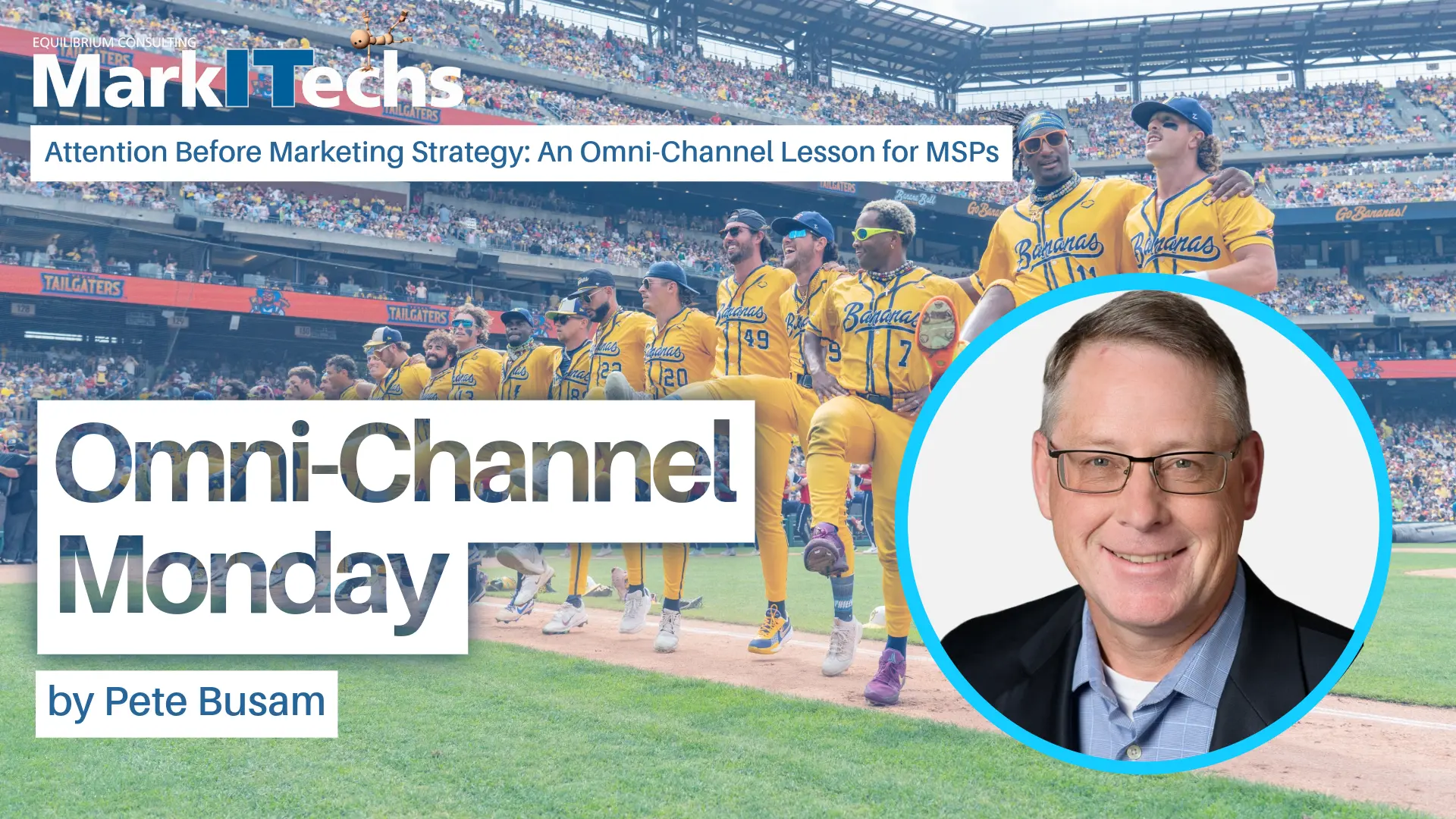
Attention before marketing strategy is the most overlooked idea in B2B marketing heading into 2026.
Recently, I watched a talk by Jessie Cole, owner of the Savannah Bananas, that explained the difference between a marketing plan and an attention plan.
It stopped me in my tracks. Not because it was complex or trendy.
But because it was obvious.
And obvious ideas are often the ones entire industries miss.
Why This Distinction Matters So Much
A marketing plan assumes something critical already exists.
Attention.
It assumes buyers are:
- listening
- curious
- open to persuasion
An attention plan, however, starts earlier.
It asks:
“Why would anyone care enough to notice us in the first place?”
That single shift explains why so much MSP marketing underperforms despite good intentions and solid execution.
Giving Credit Where It’s Due
The Savannah Bananas did not market baseball better.
They re-engineered attention.
Instead of asking how to promote baseball, they asked:
“Why would someone choose us over everything else competing for their time?”
Streaming services.
Social media.
Staying home.
They designed Banana Ball as an experience:
- Fast pace
- No dead time
- Fan participation
- Predictable fun
- Built-in scarcity
Marketing became documentation, not persuasion.
That is the lesson MSPs should study closely.
The MSP Marketing Trap
Most Managed Service Providers do exactly what they are told.
They build:
- Service pages
- Tool lists
- Certifications
- Feature-driven blogs
- Ads offering assessments
None of this is wrong.
Yet, most MSPs still sound interchangeable.
From the buyer’s perspective:
- “Everyone claims security leadership.”
- “All MSPs say they’re proactive.”
- “I don’t know who to trust until something breaks.”
Marketing amplifies sameness when attention is missing.
Attention Is the New Top of Funnel
Funnels have changed.
| Old Funnel | New Reality |
|---|
| Awareness | Attention |
| Consideration | Trust |
| Conversion | Momentum |
If attention is never earned, everything downstream suffers.
- Ads leak.
- Content gets skimmed.
- Sales calls start cold and price-focused.
Attention Before Marketing Strategy for MSPs
An MSP attention plan answers one core question:
“Why should a business leader stop scrolling and listen to us?”
IT is not about
- tools.
- Uptime guarantees.
- Buzzwords.
Attention is earned through perspective.
What MSPs Should Compete on for Attention
- Buyer Anxiety, Not MSP Features
Buyers rarely wake up wanting IT services.
They wake up worrying about:
- Downtime
- Security exposure
- Compliance mistakes
- Surprise costs
Attention-driven MSP messaging sounds like:
- “The IT costs you didn’t budget for.”
- “Who’s watching systems while everyone’s on vacation?”
- “Security failures that never make incident reports.”
Recognition creates attention.
- A Clear, Named Point of View
The Savannah Bananas own fun-first baseball.
MSPs need an equally clear stance:
- “Security is a leadership issue.”
- “Local IT beats private-equity support.”
- “Compliance without operations is theater.”
A named point of view creates memory.
Memory builds trust.
- Education That Reveals, Not Explains
Most MSP content explains what.
Attention-based content reveals why it matters.
For example:
- “Why did MFA not stop last week’s breach?”
- “What auditors actually fail companies for.”
- “The quiet systems that cause the loudest outages.”
Revelation builds anticipation.
Anticipation keeps audiences coming back.
What an MSP Attention Plan Looks Like in Practice
An attention plan is not a campaign.
It is a pattern.
Effective MSP patterns include:
- A recurring “This isn’t an IT issue” series
- Weekly breakdowns of real-world failures
- Short videos answering one uncomfortable question
- Self-assessment tools before sales conversations
Marketing then amplifies what already resonates.
Where Most MSP Pipelines Break
Most MSP pipelines fail before trust forms.
Trust often arrives only after A:
- outage
- ransomware scare
- failed vendor relationship
Attention-first strategies move trust earlier.
- Sales conversations become warmer.
- Price pressure decreases.
- Fit improves.
Why This Matters: Entering 2026
AI has made content cheap.
Algorithms filter attention aggressively.
Buyers reward familiarity over claims.
The Savannah Bananas understood this shift early.
They did not out-market competitors.
Simply, they out-designed attention.
The Omni-Channel Monday Takeaway
Marketing plans still matter.
However, attention to the marketing strategy must come first.
If MSP marketing feels stale, the solution is rarely more:
- posts
- ads
- tools
The real question is:
“What conversation do we want to own?”
That question defines leaders in 2026.
Final Thought
You cannot out-market indifference.
The Savannah Bananas proved that attention is engineered long before it is promoted.
For MSPs, the opportunity is clear:
Build a point of view worth following before promoting services.
That is how trust starts earlier. It is how demand compounds. and is how Omni-channel marketing finally works.
About the Author: Pete Busam

Share This Story, Choose Your Platform!
Related Posts