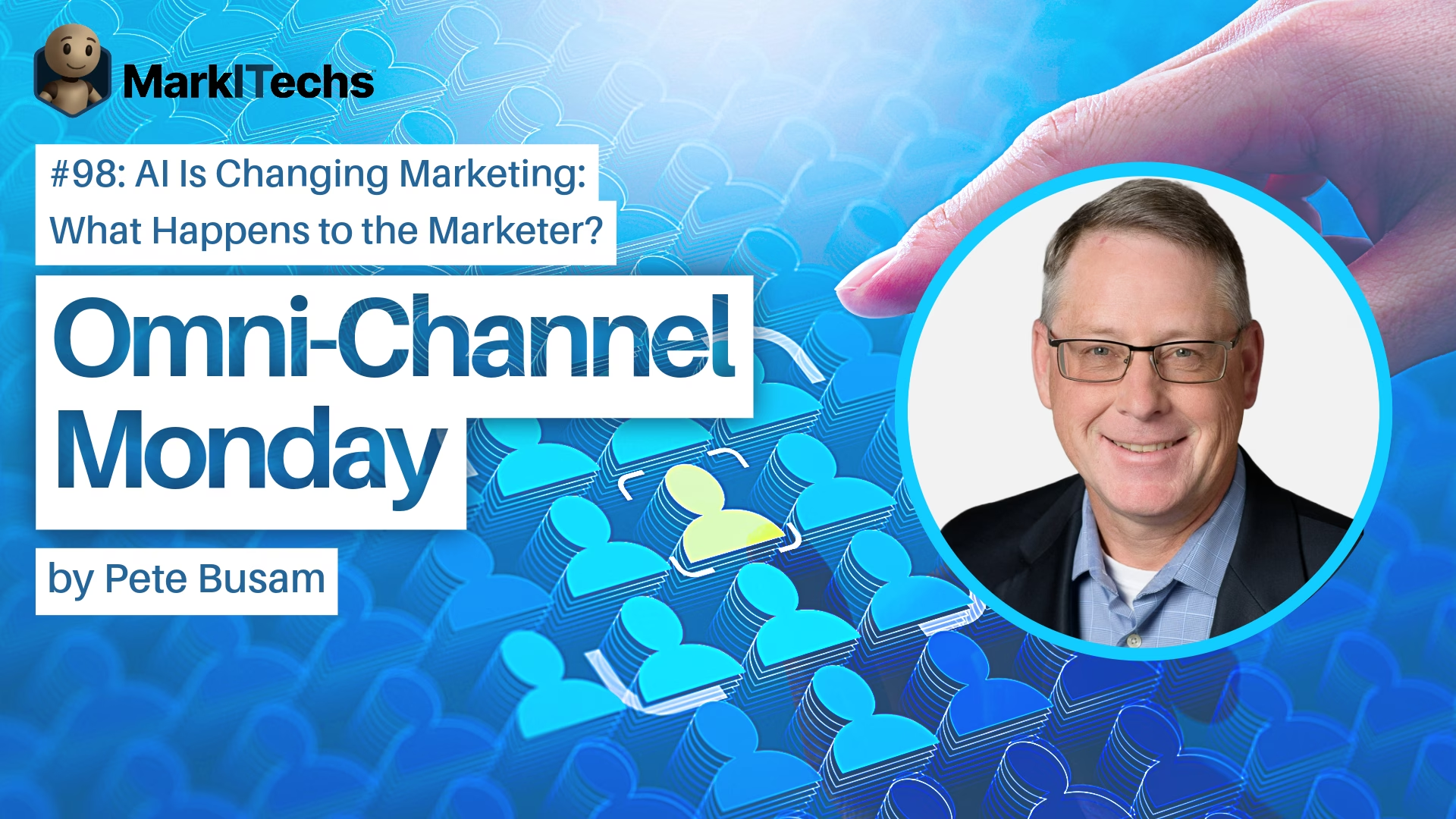
AI Is Changing Marketing: What Happens to the Marketer?
AI is changing marketing in ways that go far beyond writing faster emails or creating better social posts.
In fact, I think we are focusing on the wrong part of the AI conversation.
Every day, we hear about another tool that can create content, build graphics, analyze data, write emails, or develop campaigns. Because these tools are so easy to use, almost anyone can now produce something that looks like marketing.
That has created an interesting perception.
If everyone can create marketing, does that mean everyone is suddenly a marketer?
I don’t think so.
However, I do think AI is forcing us to rethink what a marketer should do.
That distinction matters.
AI has made execution easier. Yet marketing was never supposed to be defined simply by execution.
The American Marketing Association defines marketing around creating, communicating, delivering, and exchanging offerings that provide value. That definition says something important. Marketing is about connecting value with an audience. It is not simply about producing content.
That difference might become even more important as AI continues to evolve.
Is AI Making Everyone a Marketer?
No. AI is making marketing tools available to everyone, but access to tools does not create marketing expertise.
We have seen this happen before.
Canva made professional-looking graphics easier to create. However, it did not automatically teach everyone design, branding, or visual communication.
WordPress made building websites easier. Yet we certainly did not eliminate the need for web designers, developers, or strategists.
HubSpot made marketing automation available to thousands of businesses. Still, installing HubSpot never guaranteed that someone understood demand generation or buyer journeys.
AI is simply the next step.
Someone can now sit down and ask ChatGPT to write an email about cybersecurity.
Within seconds, they have an email.
It may even be a pretty good email.
However, creating the email is only a small part of the marketing decision.
- Why are we sending it?
- Who should receive it?
- What problem does that person have?
- Does the message matter to them today?
- What has sales already learned from conversations with similar prospects?
- What makes our point of view different?
Most importantly, what should happen after someone reads it?
Those questions existed before AI, and they still exist after AI.
The difference is that marketers may finally have more time to answer them.
For years, many marketing teams have spent most of their time producing things. There was always another email, blog, graphic, webinar, presentation, landing page, or campaign waiting.
AI can reduce that workload.
So the real opportunity isn’t creating twice as much content.
The opportunity is spending twice as much time understanding why we are creating it.
How Is AI Changing Marketing Roles?
AI is changing marketing roles by shifting value from production toward strategy, judgment, customer insight, and business understanding.
That change could be one of the best things to happen to marketing.
For years, marketers have said they need more time for strategy.
Now technology may actually give us some of that time.
The question becomes what we do with it.
I would rather see marketers spend another hour talking with sales than producing five additional LinkedIn posts.
I would rather have them listen to a customer conversation than create another generic ebook.
I would rather see someone study why three opportunities were lost than produce another campaign simply because the calendar says so.
That is because good marketing starts with understanding.
It requires knowing the customer, the business, the competition, and the problem being solved.
AI can certainly help with all of those things. However, someone still needs enough experience to recognize what matters.
That is why experienced marketers may become more valuable.
Give two people the same AI platform, and they will not necessarily produce the same marketing outcome.
One person may ask AI to create ten social posts. Another may recognize that the company should not be talking about that topic at all.
That second decision may create far more value. Marketing judgment often means knowing what not to create.
AI does not remove that responsibility. If anything, it makes that responsibility more important.
The World Economic Forum’s 2025 Future of Jobs research supports this broader shift. AI and technology skills are growing quickly. However, human skills remain critical. Analytical thinking, creative thinking, resilience, leadership, and collaboration continue to carry significant value.
That combination sounds a lot like the future marketer to me.
Will AI Replace Marketing Jobs?
AI will replace some marketing tasks, but changing tasks does not automatically mean eliminating the marketer.
I think we need to separate those two ideas.
There are absolutely things marketers do today that AI will handle tomorrow.
Some are already disappearing.
Basic research can happen faster. First drafts take minutes. Campaign variations can be created almost instantly.
Reporting and data analysis will continue improving as well.
The World Economic Forum found that nearly 40% of required job skills could change by 2030. Meanwhile, many employers expect to invest heavily in employee upskilling.
That tells me the real story is not simply about jobs disappearing.
It is about job change. Marketing roles will change too.
That raises another issue that I think deserves much more discussion.
How will young marketers learn?
Many of us learned marketing by doing basic work first.
We:
- wrote copy that got edited.
- pulled reports that someone questioned.
- created campaigns that failed.
- listened to sales complaints that the leads were terrible.
- watched customers react differently than expected.
None of those experiences looked particularly important at the time.
Together, they developed judgment.
If AI handles much of the entry-level execution, companies cannot stop developing entry-level marketers.
- They will need to develop them differently.
- Young marketers should get closer to customers sooner.
- They should listen to sales calls and customer interviews.
- Entry Level marketers should learn why campaigns work and why others fail.
- They should understand how the company makes money.
Most importantly, they must learn how to challenge AI rather than simply accept its output.
That experience becomes the foundation for something AI cannot manufacture instantly.
Perspective.
Why Could AI Make Marketing More Human?
AI could make marketing more human because generic information becomes less valuable when anyone can generate it instantly.
Think about the content already filling our feeds.
Ask AI for five cybersecurity tips, and you will get them.
Ask for ten ways businesses can improve productivity, and you will get those too.
Your competitors have access to the same technology.
So do thousands of other companies.
As a result, simply having information becomes less interesting.
Experience becomes more interesting.
What:
- happened with a customer last week?
- Surprised by your service team?
- question keeps coming up during sales conversations?
- mistake did your company make five years ago?
- Did you learn from it?
Those stories contain something AI cannot create without us.
Real experience.
AI can help organize the story. It can improve the structure and create different versions.
However, someone still needs to recognize that the story matters.
That is marketing.
And that is why AI is changing marketing rather than simply replacing marketers.
The marketers who succeed will not compete with AI on speed.
They will use AI for speed.
Then they will apply the time they saved toward customer understanding, strategy, creativity, and better decisions.
AI did not suddenly make everyone a marketer. It made almost everyone capable of producing marketing materials.
There is a big difference.
Maybe that difference is exactly what companies need to understand next.
AI can create more, but marketers still need to decide what matters.
Maybe AI is not making marketers less important after all.
Maybe it is finally forcing us to become better marketers.
What should businesses do next?
Businesses should stop measuring marketing value only by output. Instead, they should examine whether marketing understands customers and supports real business outcomes.
Give marketers access to AI. Encourage them to use it.
Then give them access to sales, service, customers, data, and leadership.
That combination will be much harder for competitors to copy.
At Equilibrium Consulting, we believe technology should support the marketing strategy, not become the strategy. If AI has your team producing more but accomplishing less, it may be time to look at what is driving the activity.
What do you think? Is AI making marketers less necessary, or is it making true marketing experience easier to recognize?
About the Author: Pete Busam

Share This Story, Choose Your Platform!
Related Posts