Welcome to the Trust Recession: Why Digital Trust Is Becoming Your Greatest Competitive Advantage
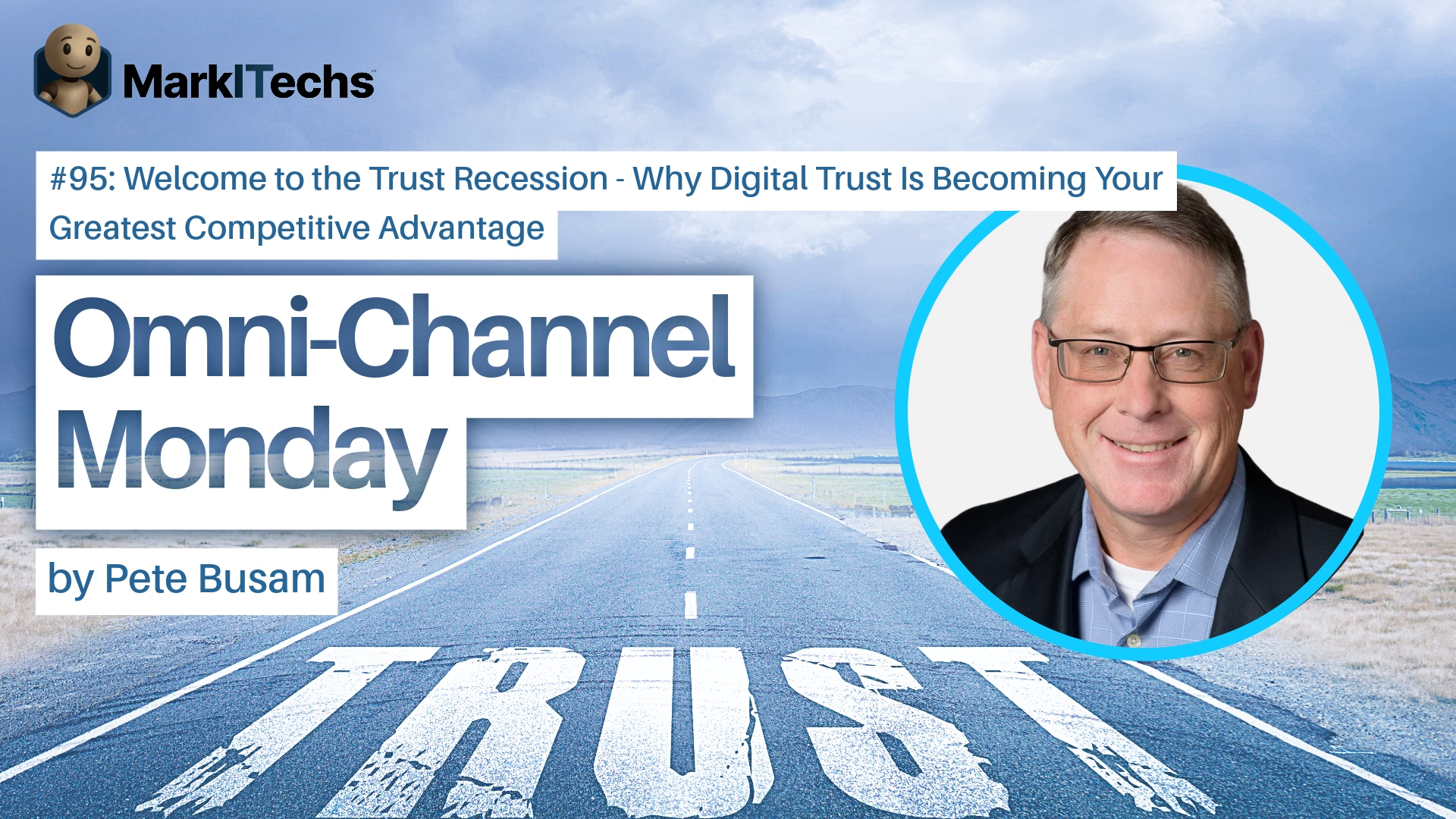
Welcome to the Trust Recession
Every decade or so, something changes the way people buy.
When I first started in business, a good Yellow Pages ad mattered. Then every company needed a website. Before long, everyone was chasing the first page of Google. Social media changed the conversation again, and then mobile devices reshaped how buyers consumed information.
Today, artificial intelligence is the topic everyone wants to discuss.
While AI is changing marketing, I don’t believe it’s the biggest shift we’re experiencing.
I think we’re entering what I call the Trust Recession.
It’s not an economic recession. Business is still being done every day. Instead, it’s a recession in confidence. Buyers have access to more information than at any point in history, yet they trust less of what they read. Every company claims to be the best. Every website promises exceptional service. Every LinkedIn profile sounds polished. Every brochure says the same things.
AI didn’t create this problem. It simply made it impossible to ignore.
Marketing Didn’t Lose Its Voice. Buyers Changed How They Listen.
Over the last several weeks, I’ve had remarkably similar conversations with business owners.
One wanted to know why their Google rankings had slipped even though they were producing quality content.
Another couldn’t understand why a competitor with an average website continued winning opportunities.
Another asked why they were investing in marketing but weren’t seeing more qualified conversations.
At first glance, those appear to be different challenges.
I don’t think they are.
The common denominator isn’t Google.
It isn’t AI, or the website.
It’s the buyer.
Today’s buyer researches differently than they did even three years ago. They might discover your company through Google. They may ask ChatGPT or Gemini a question before they ever visit your website. They’ll likely review your LinkedIn profile, read customer reviews, visit your website, and look for evidence that supports your claims.
By the time they contact you, they’ve already formed an opinion. They’re not looking for more marketing.
They’re looking for proof.
Digital Trust Has Become the New Currency
For years, the marketing equation looked simple.
- Better website.
- Better rankings.
- More traffic.
- More leads.
I don’t believe that’s how buying decisions are made anymore.
Today the equation looks more like this:
Digital Trust + Reputation + Authority + Helpful Content + Consistent Visibility + Timing = Meaningful Conversations
Notice something missing.
The website isn’t at the beginning of the equation.
That’s because I no longer believe websites create trust. I believe they confirm it.
Think about your own buying habits. How many times have you visited a company’s website only after reading reviews, seeing someone recommend them on LinkedIn, listening to a podcast, or asking an AI platform for suggestions? Most of us do it every day without realizing it.
The website is still incredibly important.
It just isn’t carrying the entire weight of the buying decision anymore.
Why Omnichannel Marketing Matters More Than Ever
People often ask why I spend so much time talking about omnichannel marketing.
The answer is simple.
Because your buyers don’t research your company in one place. Neither should your marketing. Someone might first discover your business through AI search. Later they may see one of your LinkedIn articles. A week later they hear you speak at an industry event. Then they read a customer success story. Finally, they visit your website.
Each interaction answers the same question.
“Can I trust these people?”
That’s why omnichannel marketing has never been about posting everywhere.
It’s about creating consistency everywhere. When every touchpoint reinforces your expertise, buyers become more confident.
Confidence eventually becomes conversations.
SEO Isn’t Dead. It’s Growing Up.
Every time a new technology appears, someone predicts the death of Search Engine Optimization (SEO).
We’ve heard it before.
Voice search was going to replace it. Social media was going to replace it. Now AI is supposedly replacing it. I don’t believe any of those statements.
SEO remains one of the most important investments a business can make.
What has changed is what surrounds it. Today, SEO works alongside Answer Engine Optimization (AEO), structured data, authoritative content, reviews, customer success stories, digital public relations, and consistent thought leadership.
Google continues to emphasize Experience, Expertise, Authoritativeness, and Trustworthiness (EEAT) because those signals help determine whether content deserves visibility. AI platforms are increasingly relying on many of those same signals when selecting sources for answers.
The objective hasn’t changed.
Earn trust. The ways we demonstrate it have.
Evidence Is Replacing Marketing Claims
A few things I’ve noticed over the past year is that businesses continue talking about themselves.
- “We have great service.”
- “We care about our customers.”
- “We’re industry experts.”
The problem isn’t that those statements are false.
The problem is everyone says them.
Buyers don’t need another promise.
- They need evidence.
- Customer success stories.
- Verified reviews.
- Educational articles.
- Conference presentations.
- Vendor partnerships.
- Industry recognition.
- Helpful videos.
- Real expertise.
None of those feel like advertising. They feel believable. That’s the difference.
Marketing tells people you’re good. Evidence allows them to reach that conclusion on their own.
The Opportunity Ahead
I actually think this is good news.
Companies that genuinely care about their customers now have an opportunity to separate themselves from competitors who rely on generic messaging and polished graphics.
You don’t need:
- the biggest advertising budget.
- the flashiest website.
- to publish every day.
You do need to consistently create reasons for buyers to believe you. That’s a much more sustainable competitive advantage.
Technology will continue changing. AI will continue improving. Search will continue evolving.
Trust won’t.
That’s why I believe we’re entering the Trust Recession.
Not because trust has disappeared.
Because it has become more valuable than ever.
As you look at your marketing this week, don’t ask yourself whether you’re publishing enough content. Ask yourself something far more important.
If someone spent thirty minutes researching my business today, would they leave convinced we’re the obvious choice?
If the answer is yes, keep building.
If the answer is no, don’t start with another campaign.
Start by creating another reason to be believed.
Because in today’s market…
- Being found gets you noticed.
- Being trusted gets you chosen.
How much digital trust is your business really building?
Your website is only one piece of the equation. Our no-cost ContentRX™ Assessment evaluates your website, SEO, AEO, content, reviews, authority, and omnichannel presence to identify where buyers gain confidence—and where they lose it. If you’re ready to build credibility that drives conversations instead of just clicks, let’s start there.
Frequently Asked Questions
What is digital trust?
Digital trust is the confidence buyers develop in your business through every online interaction. It includes your website, reviews, search visibility, AI-generated answers, customer success stories, social media presence, and overall reputation. Businesses with stronger digital trust typically experience higher engagement and more qualified sales conversations.
What is the Trust Recession?
The Trust Recession is a term describing today’s buying environment, where buyers have unlimited access to information but place less trust in traditional marketing. Instead of believing company claims, they verify those claims through reviews, AI search, LinkedIn, customer references, and other independent sources before contacting a business.
How does omnichannel marketing improve digital trust?
Omnichannel marketing creates a consistent experience across every platform where buyers research your company. Rather than relying on a single website or advertising campaign, it reinforces expertise through blogs, reviews, videos, speaking engagements, social media, case studies, and search visibility. Every interaction strengthens buyer confidence.
Does SEO still matter with AI search?
Absolutely. Search Engine Optimization (SEO) remains the foundation for online visibility. However, businesses should also invest in Answer Engine Optimization (AEO), structured data, and authoritative content that AI platforms can reference. SEO and AEO now work together to improve discoverability and credibility.
How can businesses build stronger digital trust?
Organizations build digital trust by demonstrating real expertise instead of simply claiming it. Publishing educational content, earning authentic customer reviews, creating measurable case studies, maintaining consistent branding, participating in industry events, and investing in thought leadership all contribute to stronger credibility and better long-term business growth.
About the Author: Pete Busam

Share This Story, Choose Your Platform!
Related Posts