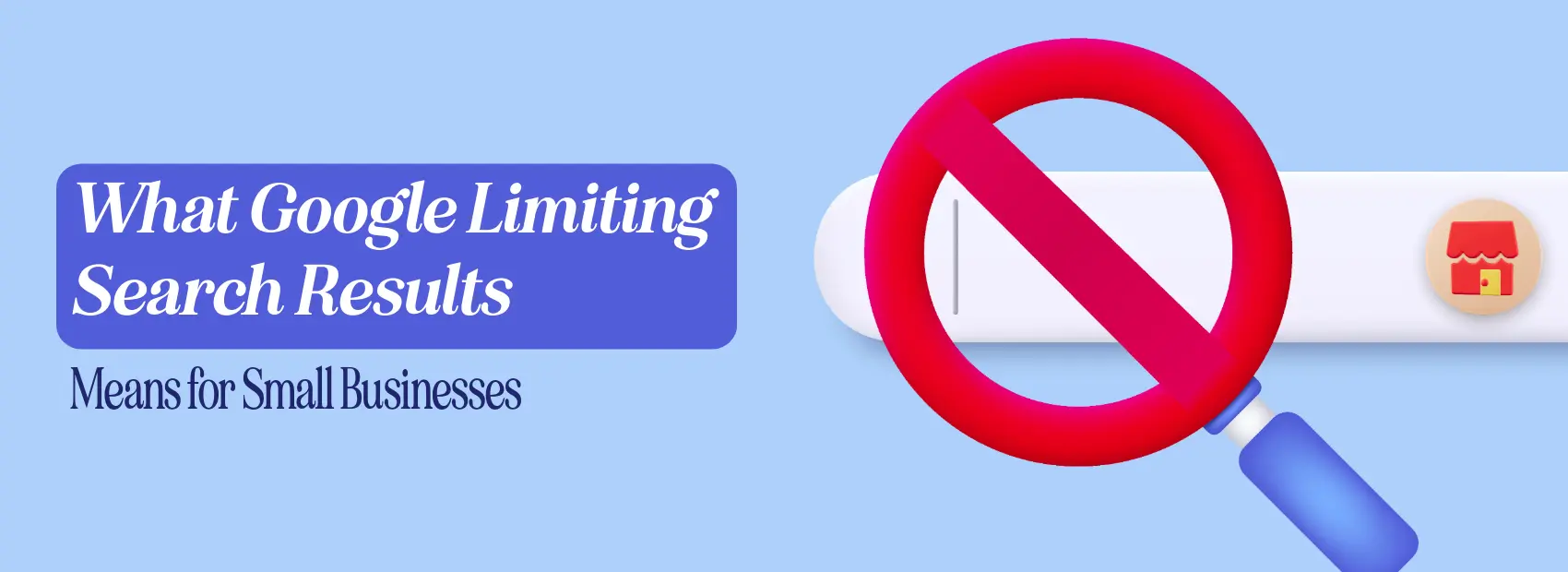
What Google Limiting Search Results Means for Small Businesses
Introduction
When Google limits search results, it might sound like a small technical tweak — but the ripple effects reach far beyond that. For years, users and SEO tools could display up to 100 results on a single search page using a special URL parameter. In 2025, Google quietly removed that option, limiting everyone to just 10 results per page.
This change reshapes how rankings are tracked, how impressions are counted, and even how small businesses appear in reports. Let’s break down what really happened, why it matters, and how you can adapt your digital strategy.
1. What Changed — And Why It Matters
In mid-2025, Google officially stopped supporting the &num=100 parameter, which previously allowed users and SEO platforms to pull 100 search results in one query. From now on, all searches are capped at 10 results per page — no exceptions.
According to Search Engine Land, Google confirmed that this feature was “never formally supported.” That statement signals that the change is permanent and intentional.
While most users never noticed the difference, SEOs, marketing agencies, and analytics tools did. The removal impacts how data is collected, how impressions are counted, and how rankings are reported.
2. Why Google Made This Change
Google’s decision wasn’t arbitrary. The shift is rooted in three main motivations:
a. To Reduce Data Scraping
For years, SEO tools used the &num=100 parameter to pull hundreds of results per query — effectively scraping large portions of Google’s search pages. This created heavy server loads and privacy concerns. Limiting results to 10 per page now forces those tools to make multiple smaller requests, slowing down bulk data extraction.
b. To Cut Down on Impression Inflation
Before the change, automated bots and SEO software could inflate impression counts in Google Search Console, making performance reports appear more favorable than reality. By restricting the parameter, Google eliminates many false or non-human impressions.
c. To Simplify Infrastructure
Serving 100 results per query consumes significantly more resources than serving 10. By enforcing a 10-result limit, Google streamlines its backend operations while ensuring faster response times for users worldwide.
3. How Google Limiting Search Results Affects Reporting
When Google limits search results, analytics dashboards start to look different.
Fewer Impressions
Many businesses are reporting sudden drops in impressions in Search Console. That doesn’t necessarily mean your visibility tanked — it means Google stopped counting impressions from automated crawlers or deep search pages that few humans ever viewed.
Better-Quality Metrics
Ironically, this change may improve your data quality. With inflated impressions gone, metrics like click-through rate (CTR) and average position will now more accurately reflect actual user behavior.
Possible Confusion
Unfortunately, many SMBs will interpret these drops as a performance loss. It’s crucial to explain to stakeholders and clients that this shift reflects cleaner, more realistic data — not a penalty or visibility dip.
4. The Real Impact on Small Businesses
Smaller businesses may feel the effects of this update more sharply than enterprise organizations. Here’s how:
a. Pressure to Rank Higher
With only 10 results shown per page, ranking beyond the first page means near invisibility. For small businesses competing against national brands, this intensifies the need for hyper-localized SEO, strong content, and backlink strategies.
b. Increased Costs for SEO Tools
Rank-tracking tools that previously fetched 100 results at once must now make 10 times as many requests. Those extra API calls mean higher costs — which could trickle down into subscription fees for agencies and SMBs alike.
c. Reduced Visibility for Long-Tail Keywords
Many smaller businesses rely on “long-tail” keywords — low-volume search terms that attract highly targeted visitors. Because these terms often appear beyond page one, visibility in reporting will shrink, even if traffic remains steady.
d. Cleaner (But Smaller) Data Pools
While your dashboards may look leaner, the data you see will now better represent actual human searches. This helps you focus on what’s working, rather than chasing misleading vanity metrics.
5. How to Adapt Your Strategy
The businesses that thrive post-update are those that embrace precision and depth. Here’s how to adjust your SEO game plan:
a. Focus on Top-10 Placement
Since only 10 results appear per page, it’s more important than ever to secure a page-one ranking. That means doubling down on content quality, keyword alignment, backlinks, and internal linking.
b. Strengthen Local SEO
Optimize for Google Business Profile, local directories, and map listings. Local optimization helps small businesses outrank national competitors in proximity-based searches.
c. Track Conversions, Not Just Impressions
Measure what matters — leads, calls, form submissions, and revenue. The disappearance of inflated impressions actually gives you cleaner performance benchmarks.
d. Build Backlinks and Authority
Partner with industry blogs, chambers of commerce, or complementary businesses to earn quality backlinks. These links boost your domain authority and make it easier to appear in those coveted top 10 results.
e. Diversify Traffic Channels
Don’t depend entirely on organic search. Use email marketing, paid ads, social media, and referral programs to maintain traffic consistency. This multi-channel approach cushions you from sudden algorithmic or reporting shifts.
f. Audit Your Tools
Make sure your SEO platform has updated its methods to comply with Google’s new limitations. Outdated tools may show incomplete or misleading data.
6. The Bottom Line — Quality Over Quantity
At first glance, Google limiting search results feels restrictive, even unfair. But in reality, it levels the playing field. The focus now shifts from collecting massive datasets to creating meaningful, human-focused content that earns top placement.
Small businesses that invest in quality content, technical SEO, and community engagement will benefit the most. The days of living off inflated impressions or deep-page visibility are ending.
This update is a reminder that visibility isn’t about quantity — it’s about connection, clarity, and credibility.
If you’re unsure how this change affects your metrics, check out Equilibrium Consulting’s ContentRX — a no-cost assessment tool that helps you identify weak spots in your SEO and align content for better reach.
About the Author: Equilibrium Consulting

Share This Story, Choose Your Platform!
Related Posts