
Social Graphic Sizing 2026: Why It’s Now a Visibility Requirement, Not a Design Preference
Social graphic sizing was once a design detail. However, in 2026, it became a visibility requirement.
Every major social platform now prioritizes native user experience over creative intent. As a result, graphics that ignore platform-specific sizing lose reach, clarity, and credibility.
Therefore, this is no longer about aesthetics. Instead, it is about how algorithms interpret your content before people ever see it.
If your graphic forces the platform to resize, crop, or compress it, performance declines silently. Meanwhile, well-sized visuals receive more screen time, drive better engagement, and achieve stronger recall.
That difference compounds over time.
Why Graphic Sizing Became an Omni-Channel Problem
Historically, marketing teams designed a single graphic and reused it across channels.
At the time, platforms tolerated that approach.
Today, they do not.
Each platform now optimizes content delivery differently:
- Vertical bias on mobile
- Safe-zone enforcement
- Compression thresholds
- UI overlays
- Scroll velocity metrics
As a result, a single graphic behaves differently across feeds.
Consequently, when sizing is wrong:
- Headlines are clipped
- Calls-to-action disappear
- Visual hierarchy collapses
- Engagement signals weaken
Eventually, trust erodes.
That is why graphic sizing belongs in omni-channel strategy, not just design workflows.
The Algorithm Shift Most Brands Missed
Social platforms are no longer neutral distribution engines. They are experienced curators.
- LinkedIn prioritizes readability and professional pacing.
- Facebook prioritizes delivery efficiency and compression control.
- Instagram prioritizes vertical format and screen real estate.
Therefore, when you ignore sizing:
- The algorithm intervenes
- The experience degrades
- Reach declines quietly
Most teams blame content quality. In reality, formatting friction often causes the problem.
LinkedIn Graphic Sizing for 2026
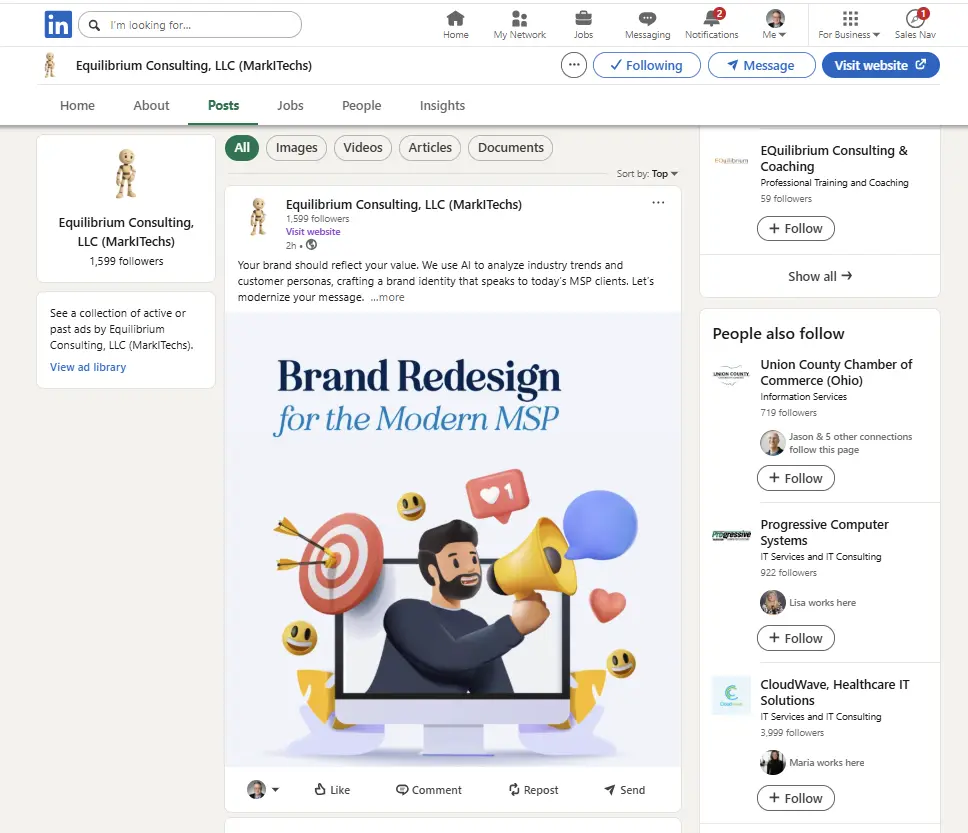
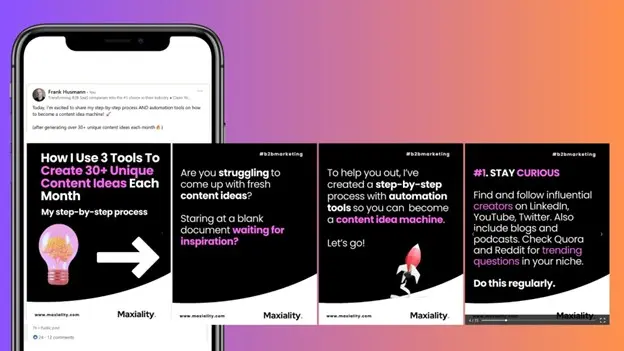
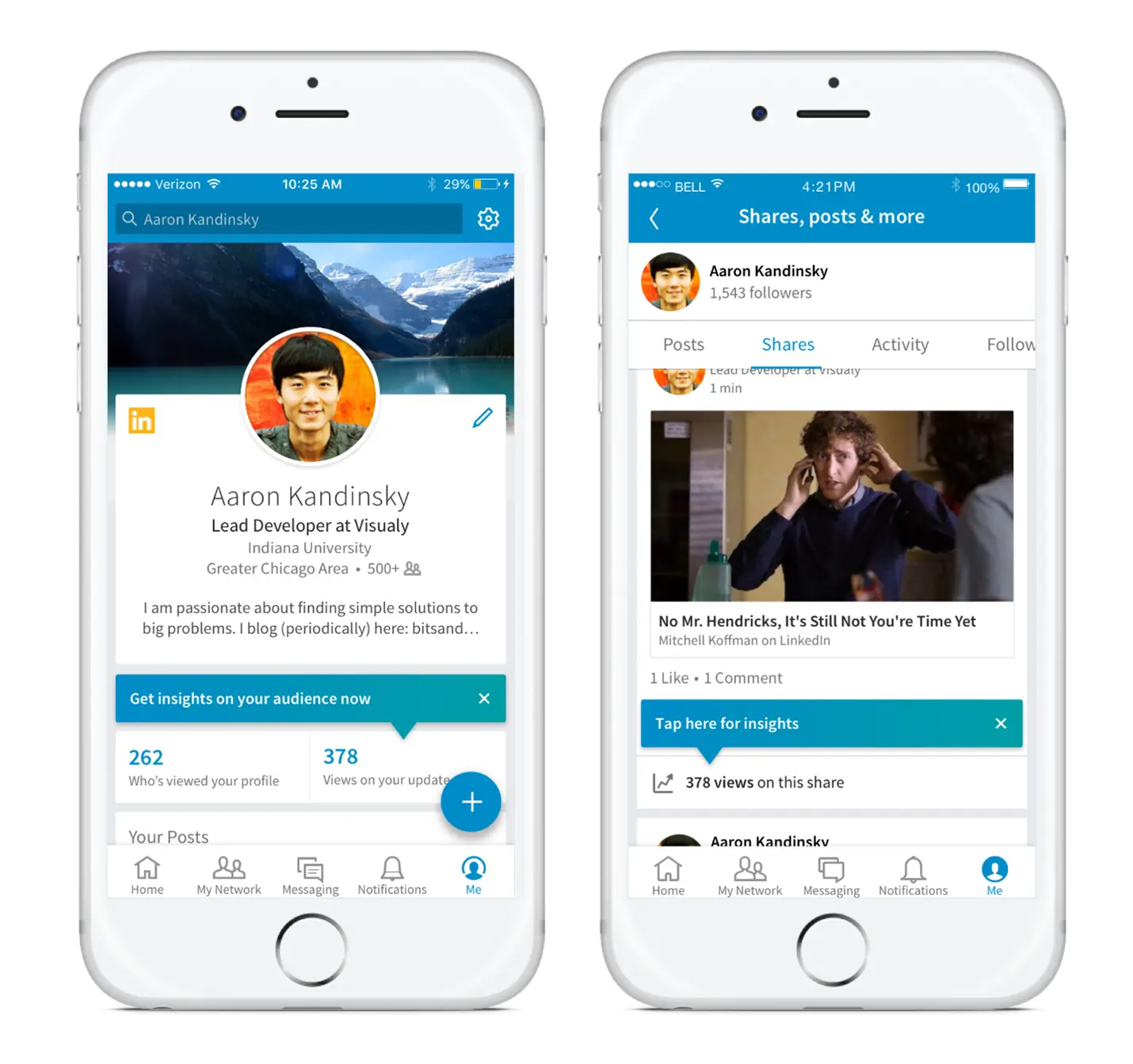
Recommended Sizes
- Landscape feed: 1200 × 627
- Square feed: 1200 × 1200
- Portrait feed: 1080 × 1350
- Carousel slides: 1080 × 1080
LinkedIn compresses aggressively on mobile. Therefore, text placed near edges often disappears.
Additionally, dense visuals reduce scannability. As a result, posts lose dwell time.
Best practice:
Use graphics to frame the idea. Let the caption deliver the depth.
Facebook Graphic Sizing for 2026
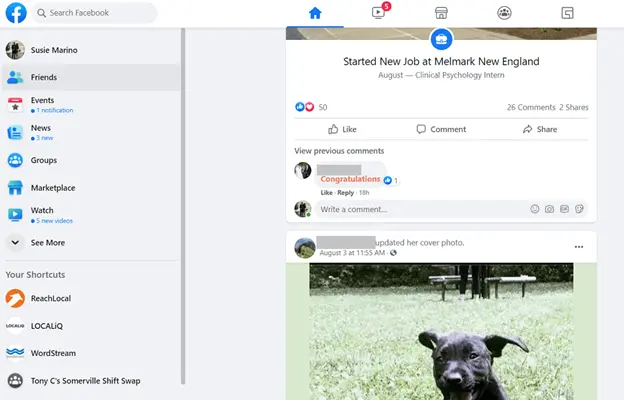
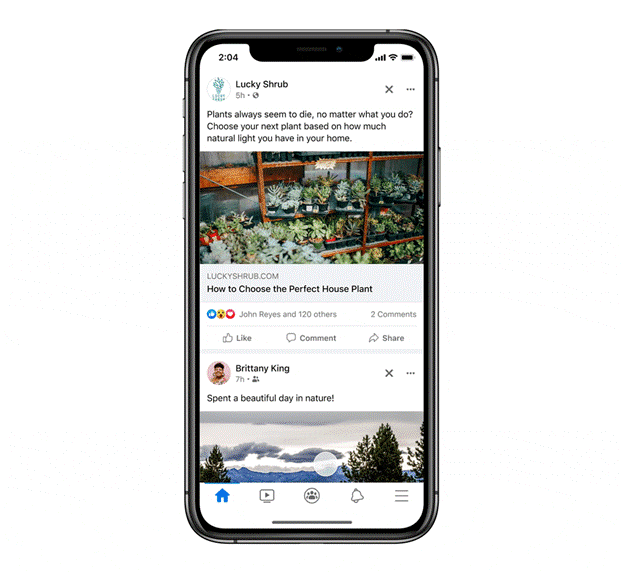
Recommended Sizes
- Square feed: 1080 × 1080
- Portrait feed: 1080 × 1350
- Link preview: 1200 × 630
- Stories: 1080 × 1920
Facebook penalizes inefficiency. If the platform must rescale your image, clarity suffers.
Furthermore, compression reduces contrast and legibility. That reduction lowers interaction probability.
Best practice:
- Design clean.
- Avoid thin fonts.
- Preserve contrast.
Instagram Graphic Sizing for 2026
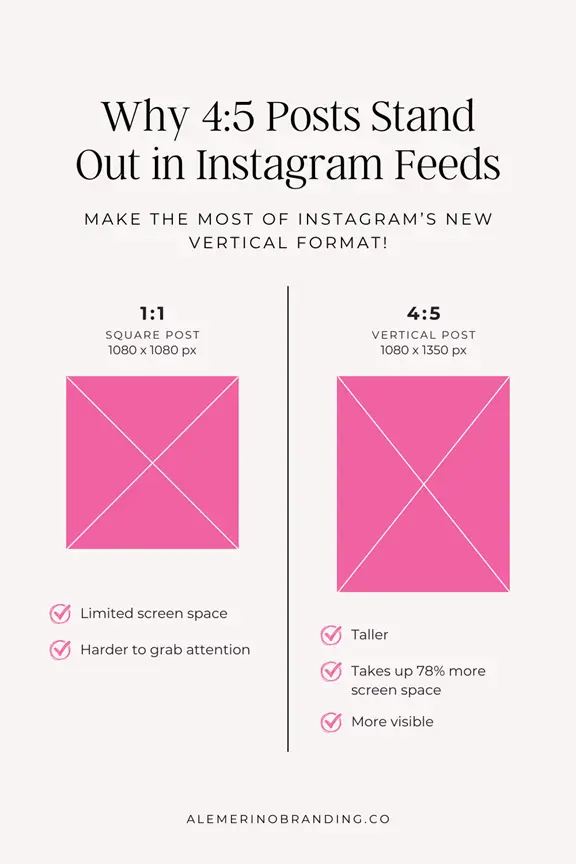

Recommended Sizes
- Portrait feed (preferred): 1080 × 1350
- Square feed: 1080 × 1080
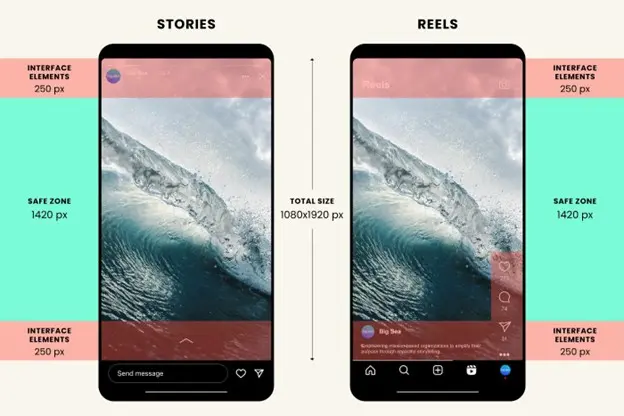
- Stories and Reels: 1080 × 1920
- Carousels: consistent sizing per slide
Instagram favors vertical dominance. Anything else surrenders screen real estate.
Additionally, interface elements consume edge space. Therefore, the critical text must remain centered.
Best practice:
- Design for the center 80%.
- Assume edges will be lost.
Why “One Graphic Everywhere” No Longer Works
Resizing is not redesigning. This distinction matters more than ever.
Each platform interprets:
- Focal points
- Text density
- Negative space
- Visual pacing
differently.
When one graphic serves all platforms:
- One channel performs
- Two underperform
- Attribution becomes unclear
Eventually, teams chase tactics instead of fixing structure.
The ContentRX Framework for Social Graphics
To solve this, ContentRX follows five rules:
- Start with a vertical master design
- Create platform-specific crops
- Adjust hierarchy, not just scale
- Preview on mobile before publishing
- Measure engagement by format
This approach removes guesswork. More importantly, it restores control.
Why Proper Sizing Builds Trust
People decide credibility before reading captions.
Visual clarity influences that decision.
Proper sizing:
- Signals professionalism
- Improves comprehension
- Reduces friction
- Increases dwell time
- Supports conversion paths
Conversely, sloppy sizing undermines even strong messaging. Good marketing fails quietly when formatting is ignored.
ContentRX Diagnostic Checkpoint
If your social content:
- Looks fine, but underperforms
- Feels inconsistent across platforms
- Generates engagement without conversions
Then the sizing strategy deserves review.
ContentRX evaluates:
- Platform-specific formatting
- Visual hierarchy
- CTA visibility
- Omni-channel alignment
No fluff. Only execution clarity.
Final Thought for Omni-Channel Monday
In 2026, social graphics are no longer decorative. They are functional components of visibility.
When sizing aligns with platform behavior, content earns attention. When it does not, even great ideas fade.
Format is now part of strategy.
If you want to validate your current social graphics, run them through ContentRX.
It is fast, practical, and designed for teams who want clarity, not noise.
About the Author: Pete Busam

Share This Story, Choose Your Platform!
Related Posts