Effective Business Communication: The Five Interpretation Lenses

Effective business communication starts with each person and the interpretation from a different lens.
Two people can hear the exact same sentence. Read the same website. Attend the same meeting. Review the same proposal.
Yet leave believing completely different things.
The message remained unchanged. The interpretation did not.
As leaders, marketers, and business owners, we often spend enormous effort improving our message.
Far fewer of us spend time understanding how our audience will interpret it.
That may be the single greatest communication mistake organizations make today.
The Five Interpretation Lenses
Over the years I’ve come to realize that every customer, employee, prospect, partner, and vendor filters information through five invisible lenses.
Understanding those lenses changes how you:
- lead.
- sell.
- market.
- build trust.
Let’s explore each one.
Lens #1 — Experience
Every buyer arrives carrying history. Sometimes that history is positive. Sometimes it is painful.
A business owner who experienced ransomware last year reads your cybersecurity page differently than someone who has never experienced a breach.
A prospect frustrated by three previous MSPs evaluates your promises differently than a referral from a satisfied client.
Experience changes interpretation.
The words haven’t changed.
Their history has.
Leadership Lesson
Never assume your audience begins where you begin.
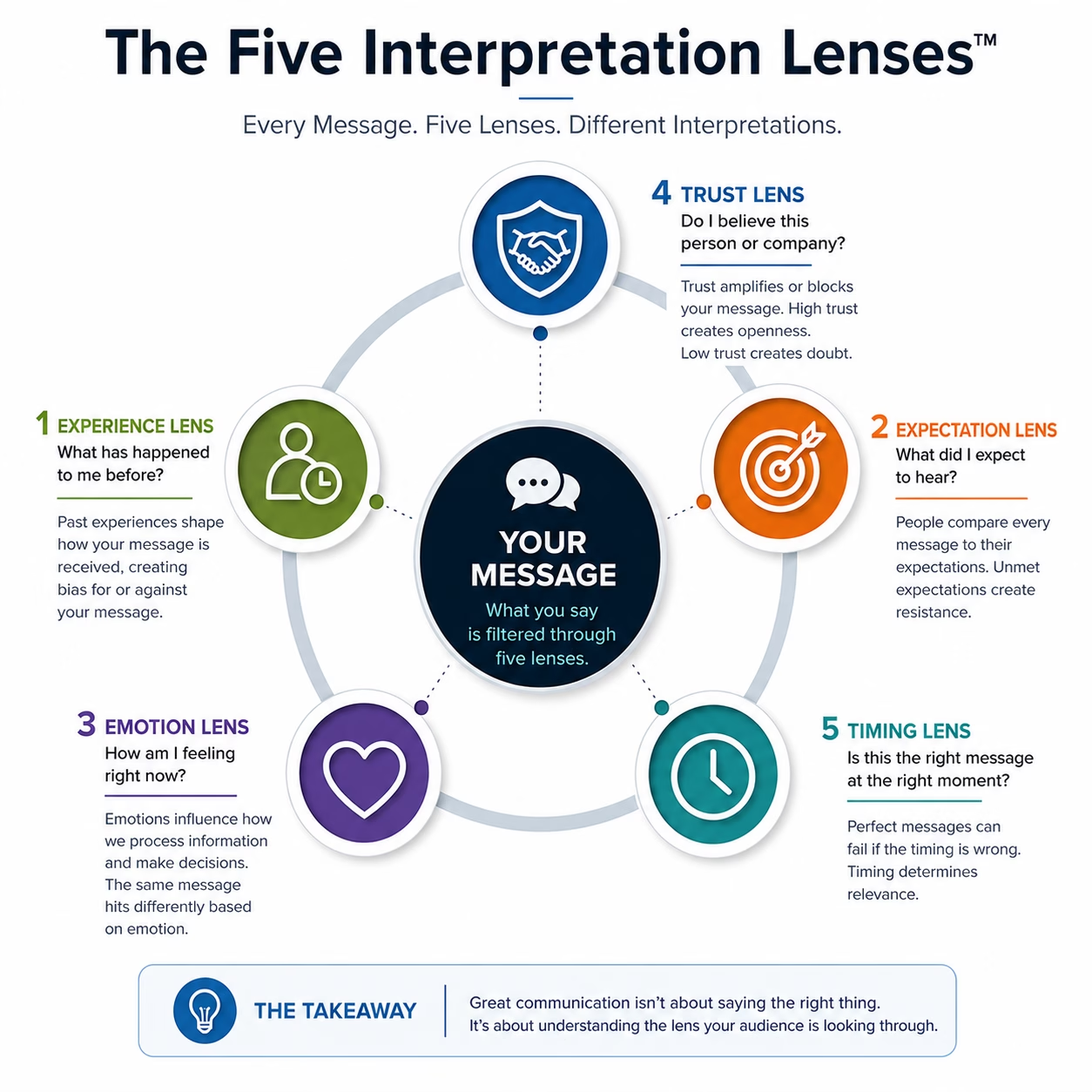
Lens #2 — Expectations
Expectations quietly shape every conversation.
People compare what they hear against what they expected to hear.
When expectations are exceeded, Trust grows.
When expectations are missed, Confusion grows.
This happens every day. A client expects strategic advice. Instead they receive technical jargon.
- An employee expects coaching.
- Instead they hear criticism.
- A prospect expects understanding.
Instead they receive a sales pitch.
Expectation influences interpretation before logic ever has a chance.
Marketing Lesson
Set expectations before attempting to exceed them.
Lens #3 — Emotion
No business decision is completely rational. Emotion always participates.
- Fear.
- Urgency.
- Stress.
- Optimism.
- Excitement.
- Confidence.
A CEO facing a cybersecurity incident hears your messaging very differently than one planning next year’s technology roadmap.
The solution may be identical. The emotional lens is not.
Leadership Lesson
Speak to the emotional reality your audience is living, not the one you wish they had.
Lens #4 — Trust
Trust determines whether your message is accepted or questioned.
High trust creates curiosity. Low trust creates skepticism.
This is why organizations invest in testimonials.
- Case studies.
- Community involvement.
- Industry certifications.
- Speaking engagements.
- Google reviews.
- Thought leadership.
These aren’t simply marketing assets. They’re trust signals.
Every interaction either deposits into or withdraws from your trust account.
Marketing Lesson
People rarely buy information.
They buy confidence.
Lens #5 — Timing
Sometimes your communication is excellent.
The timing isn’t.
A company may desperately need your services six months from now. Today they don’t. That doesn’t mean your marketing failed.
It means your visibility must continue until timing changes. Timing explains why omnichannel marketing works.
People remember organizations that consistently provide value long before they need help.
Marketing Lesson
Visibility creates familiarity.
Consistency creates opportunity.
Why Buyer Personas Matter More Than Ever
This framework is exactly why Equilibrium Consulting begins every engagement with the Ideal Client Profile, Buyer Personas, and the Customer Journey.
Those aren’t marketing deliverables. They’re interpretation deliverables.
Before writing a website, developing SEO, implementing AEO, building AI content, ask one question.
Which lenses are your buyers wearing?
That answer determines everything else.
- Messaging.
- Calls-to-action.
- Website structure.
- Search intent.
- Content strategy.
- Sales enablement.
When organizations skip this work, marketing becomes guesswork.
When they embrace it, communication becomes intentional.
AI Doesn’t Understand Your Audience
Artificial Intelligence has transformed content creation. It has not replaced human understanding.
AI understands language. It predicts patterns and organizes information.
What it cannot do is understand the lived experiences of your buyers. That’s still your responsibility.
AI helps produce content. Leadership determines context.
That distinction explains why so much AI-generated content sounds technically correct, yet emotionally disconnected.
Great AEO isn’t simply answering questions. It’s answering the questions your audience is actually asking through the lens they’re wearing.
Before You Press Publish
Before your next:
- blog.
- email campaign.
- LinkedIn post.
- sales presentation.
- AI prompt.
Pause.
Ask yourself five questions.
- What experiences is my audience bringing into this conversation?
- What are they expecting from me?
- What emotions are influencing them today?
- Have I earned enough trust to be believed?
- Is this the right time for this message?
If you can’t answer those questions…
You probably aren’t ready to communicate.
Final Thoughts
One of the greatest leadership lessons I’ve learned isn’t about speaking.
It’s about understanding.
Every person you meet is carrying experiences you’ll never fully know. Every:
- buyer has expectations you didn’t create.
- client has emotions you can’t always see.
- employee is measuring trust.
- prospect is deciding whether the timing is right.
That’s why effective business communication isn’t measured by what we intended to say.
It’s measured by what others understood. The strongest communicators don’t simply become better writers.
They become better students of people.
Because the moment you understand the lens someone is looking through, your message begins to change.
And when your message changes:
- Relationships change.
- Trust grows.
- Businesses grow.
- Leadership grows.
Frequently Asked Questions
What is effective business communication?
Effective business communication is the ability to deliver messages that your audience clearly understands, leading to better decisions, stronger relationships, and greater trust. It requires understanding how people interpret information—not just crafting the right words.
What are the Five Interpretation Lenses?
The Five Interpretation Lenses are a communication framework that explains how people process information through five influences: Experience, Expectations, Emotion, Trust, and Timing. Recognizing these lenses helps leaders, marketers, and sales professionals communicate more effectively.
Why are buyer personas important?
Buyer personas identify the goals, concerns, motivations, and behaviors of your ideal audience. They help businesses create messaging that resonates with the people they want to reach instead of relying on assumptions.
How do SEO and AEO relate to communication?
SEO helps people discover your content. AEO helps AI-powered search and answer engines understand and recommend it. Both strategies are most effective when content addresses real user intent with clarity, authority, and trust.
Why do two people interpret the same message differently?
People interpret messages through their own experiences, expectations, emotions, trust levels, and timing. These lenses influence how every conversation, marketing campaign, and leadership message is understoo
About the Author: Pete Busam

Share This Story, Choose Your Platform!
Related Posts